
The Annual Treasure Report
A Morning with the British Museum

2024 marks the third consecutive record-breaking year for reported finds and treasure cases, with the recording of 76,616 finds, 1,550 of which were treasure.
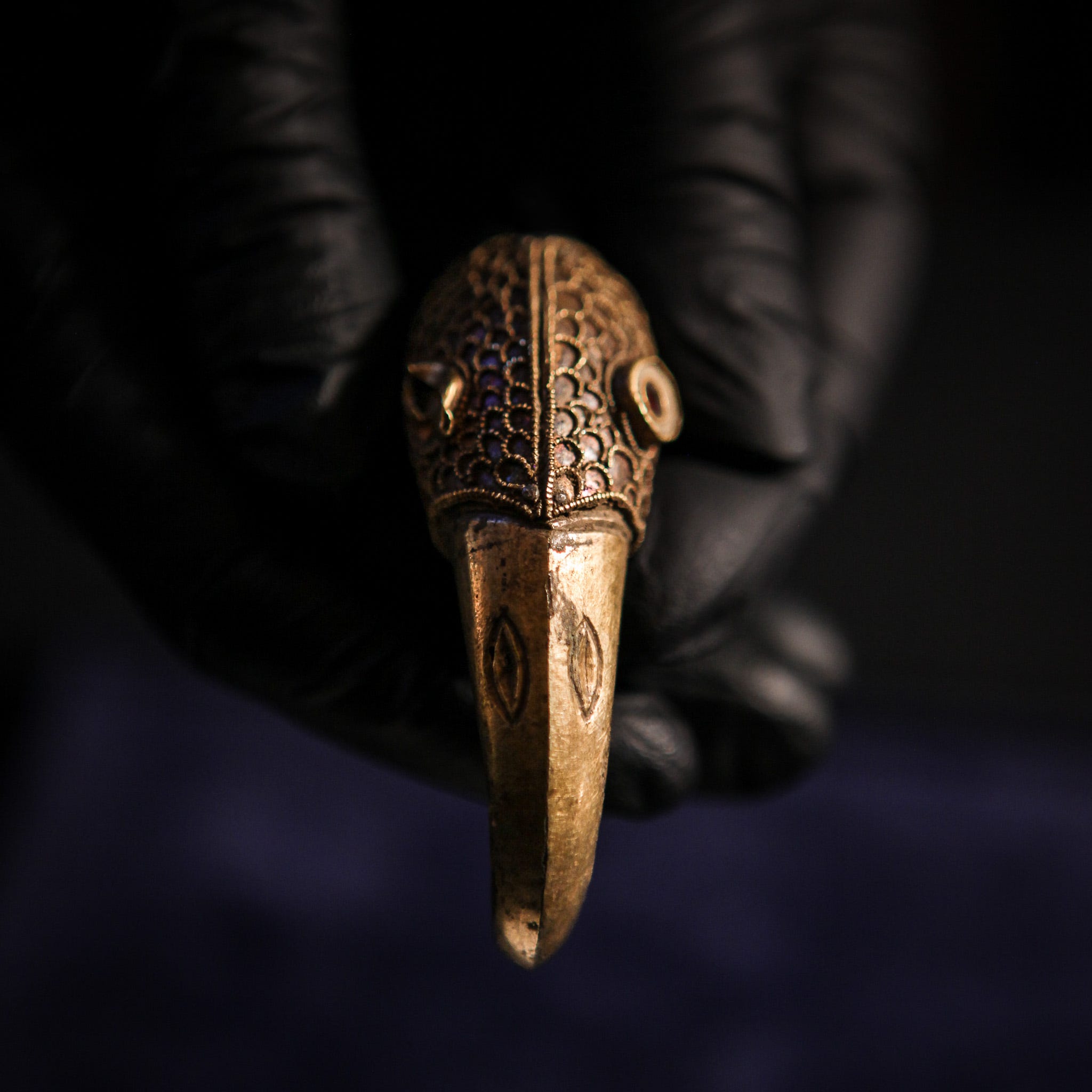
2024’s Top 3 Find-Rich Counties
Norfolk (7,120 finds)
Suffolk (5,410 finds)
Lincolnshire (5,133 finds)
These figures are the latest from the Portable Antiquities Scheme (PAS) and the British Museum, the bodies responsible for documenting all the publicly-found archaeological finds made in England, Wales and Northern Ireland, and naturally, it’s the hobby of metal detecting which is leading the way in the discovery of buried treasure.
‘94% of the finds recorded with the PAS in this latest report were recorded by metal detectorists, and I certainly see that they are going to contribute more, they are going to collaborate with museums and with the PAS in preserving this knowledge and saving it for us and future generations.’
Ian Richardson, Acting Head of PAS and Treasure at the British Museum
Every year, the British Museum hosts the annual launch of the new data, a private event gathering finders, landowners, press, archaeologists, PAS and British Museum officials together to celebrate the new discoveries—and this year we were lucky enough to be invited along …

8.30 AM, The British Museum, London, England.
Held in the early hours of Tuesday morning before the Museum opens to the public, we join a small gaggle of eager metal detectorists, landowners and Baldwin’s Head of Ancient Coins and independent treasure valuer, Dominic Chorney—thankful to spot an old friend—waiting outside the cast-iron gates on Great Russell Street. Carefully ticked off the clipboard list, we are released onto Museum property, check bags, and are directed into the ‘Collecting the World Gallery’ after a long walk through the gift shop.
The hubbub of the room envelops us the second we step through the oversized gallery doors, our view blocked by a throng of people gathering stunned around the looming dark case containing the Tudor Heart; a detectorist find from Warwickshire in 2019 which is unlike any other object in the British Museum or the UK, a gold and enamelled heart-shaped pendant associated with Henry VIII and his first wife Katharine of Aragon. Broken free from this object’s alluring spell—possibly one of the most important English treasures ever recovered—only with the offer of ‘tea or coffee?’, from the refreshments table, just off to the right of the entrance.
It’s rather apt that, this year, the annual treasure report is held within the ‘Collecting the World Gallery’—which celebrates the collectors who have helped to shape the Museum since it first opened its doors to visitors in 1759—as we are gathered today in honour of all the new artefacts recovered by the public, many of which will be making their way to shape new museum collections.
To mark the launch of the new report, we are all awaiting speeches from the Director of the British Museum, Dr Nicholas Cullinan, the Museum’s Acting Head of the Portable Antiquities Scheme and Treasure, Ian Richardson, and the Minister for Museums, Baroness Twycross. But first, we are drawn, inexplicably, to a long trestle table at the far side of the room. Covered in a dark tablecloth and shrouded in shadows, it contains three coloured velvet display trays—blue, purple and black—each housing one of the 3 exceptional recent discoveries the British Museum and PAS have decided to showcase during the event. Lit only by the dim exhibition lights and three individual lamps positioned over each find, a FLO or archaeological expert is poised behind each tray, on hand to handle the artefacts, show them to observers, answer questions and provide historical insight—our feet moving closer, before we even have the chance to voice our intentions to each other.
3 Exceptional Recent Discoveries:
An Assemblage of Anglo-Saxon Objects
Over 92% of objects for 2024 were recovered from cultivated land.
Could this be Britain’s next great Anglo-Saxon discovery?
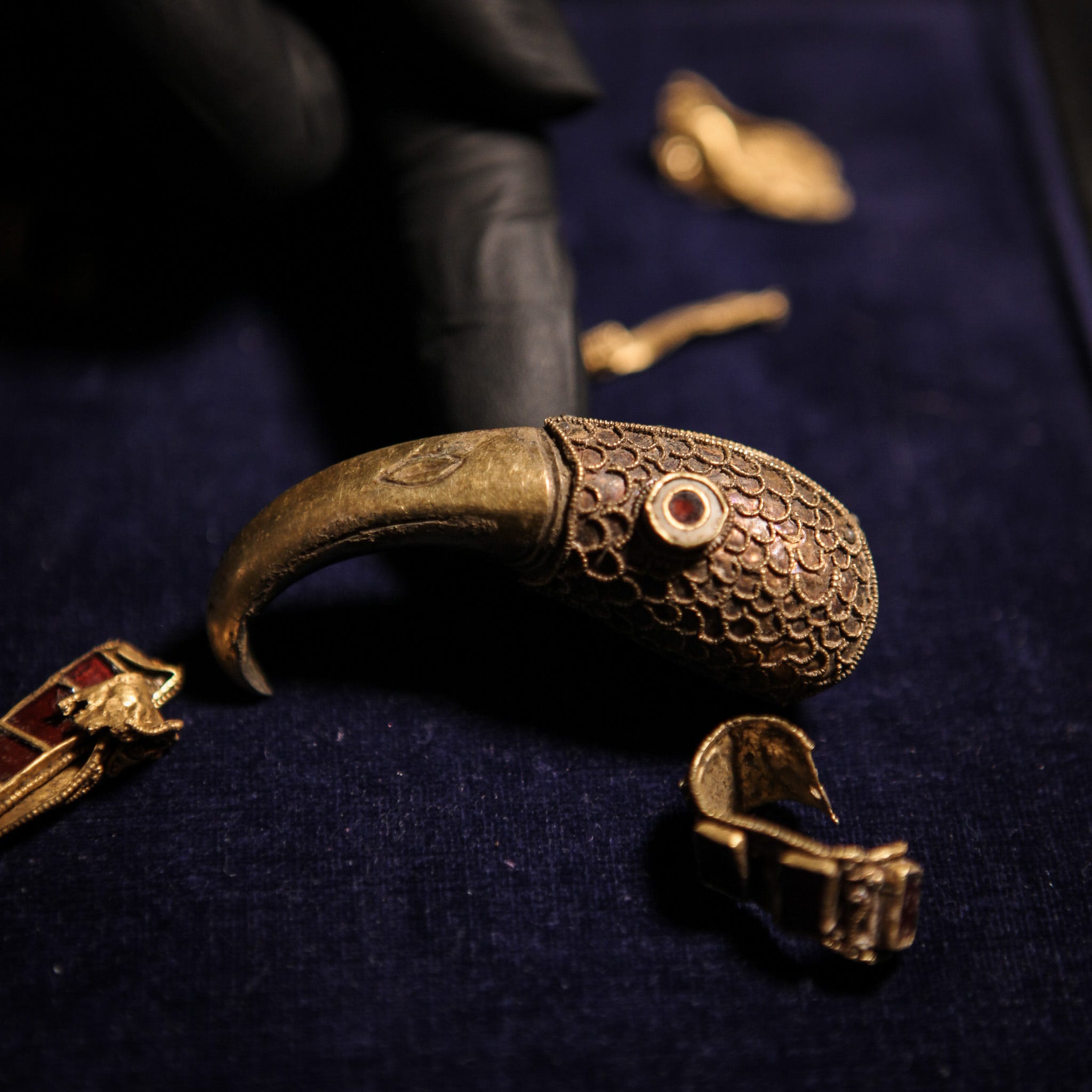
It was an overcast and damp day for Wiltshire when a 9th Region Metal Detecting Rally was brought to an abrupt close after a rushed call around the fields. Still in emotional shock over his find, Chris Phillips was faced with a nationally significant discovery in the dank soil—a silver, gold and garnet birds-head terminal from a murky time of British history where the written record was lax, yet unique artefacts were intricately crafted from the finest materials around.
Shockingly, this was the second Anglo-Saxon find of the day, the first found mere metres away, held in disbelief by newcomer to the hobby, Paul Gould, on only his second dig in the UK …
Did you realise how significant your find was?
Paul Gould, finder of the Anglo-Saxon gold and garnet ring
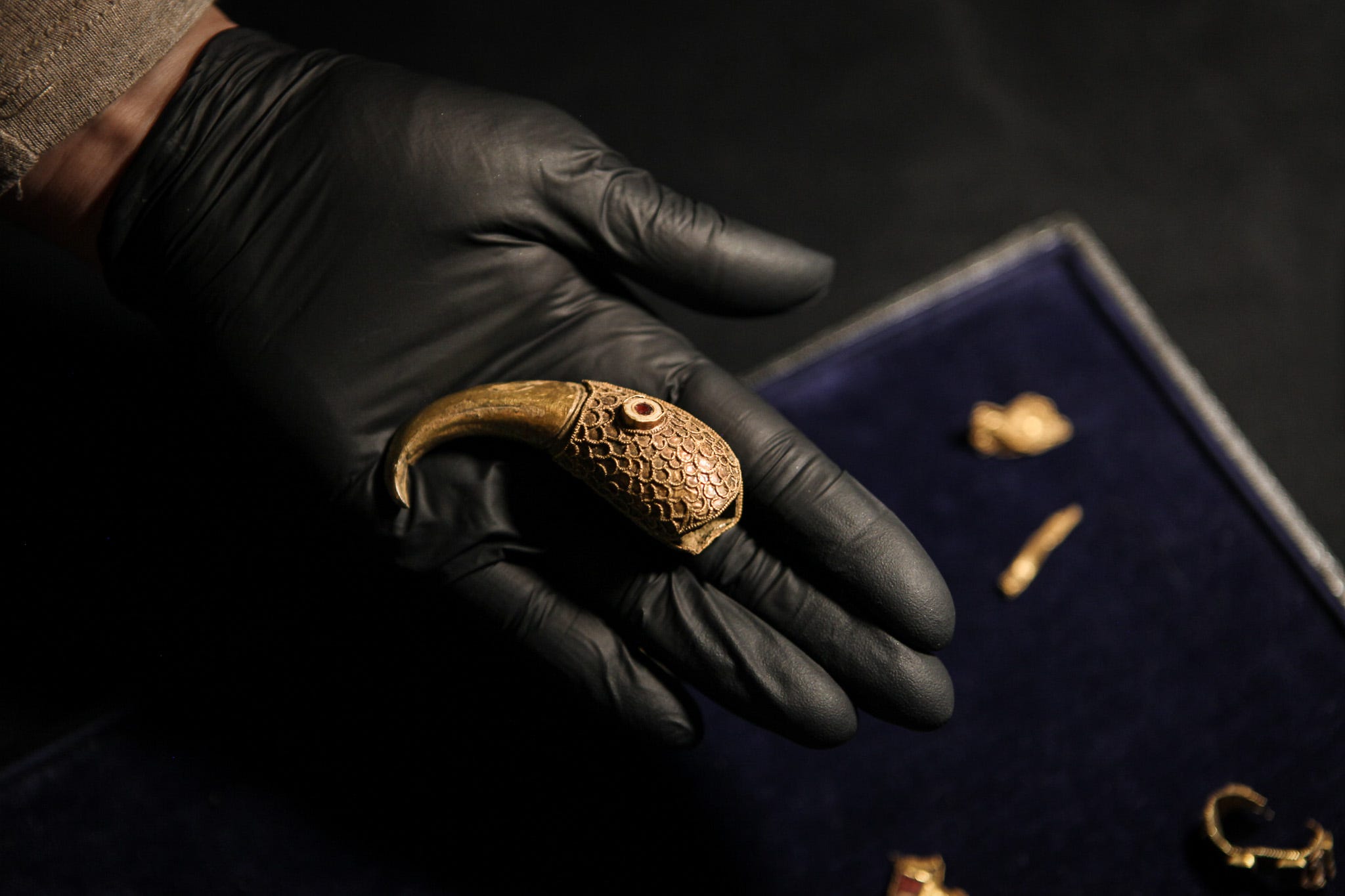
Added to later by a variety of gold and precious metal artefacts, these are just the very tip of a discovery which could be set to join the Staffordshire Hoard, Sutton Hoo and the Taplow Barrow (the richest Anglo-Saxon burial discovered prior to Sutton Hoo, excavated in 1833 by local antiquary James Rutland) in infamy. It’s believed Chris’s birds-head terminal has come from an Anglo-Saxon drinking horn, a vessel which was integral to a society which, socially and politically, revolved around communal feasts; its level of decoration and extravagance is matched only by the drinking horns from the high-status and elite society discoveries of Sutton Hoo and the Taplow Barrow. With a follow-up excavation led by Cardiff University and PAS in the coming months, this is a discovery to watch.
A 1066, Harold II, Silver Penny Hoard
Over 1.8 million finds have now been recorded with PAS.
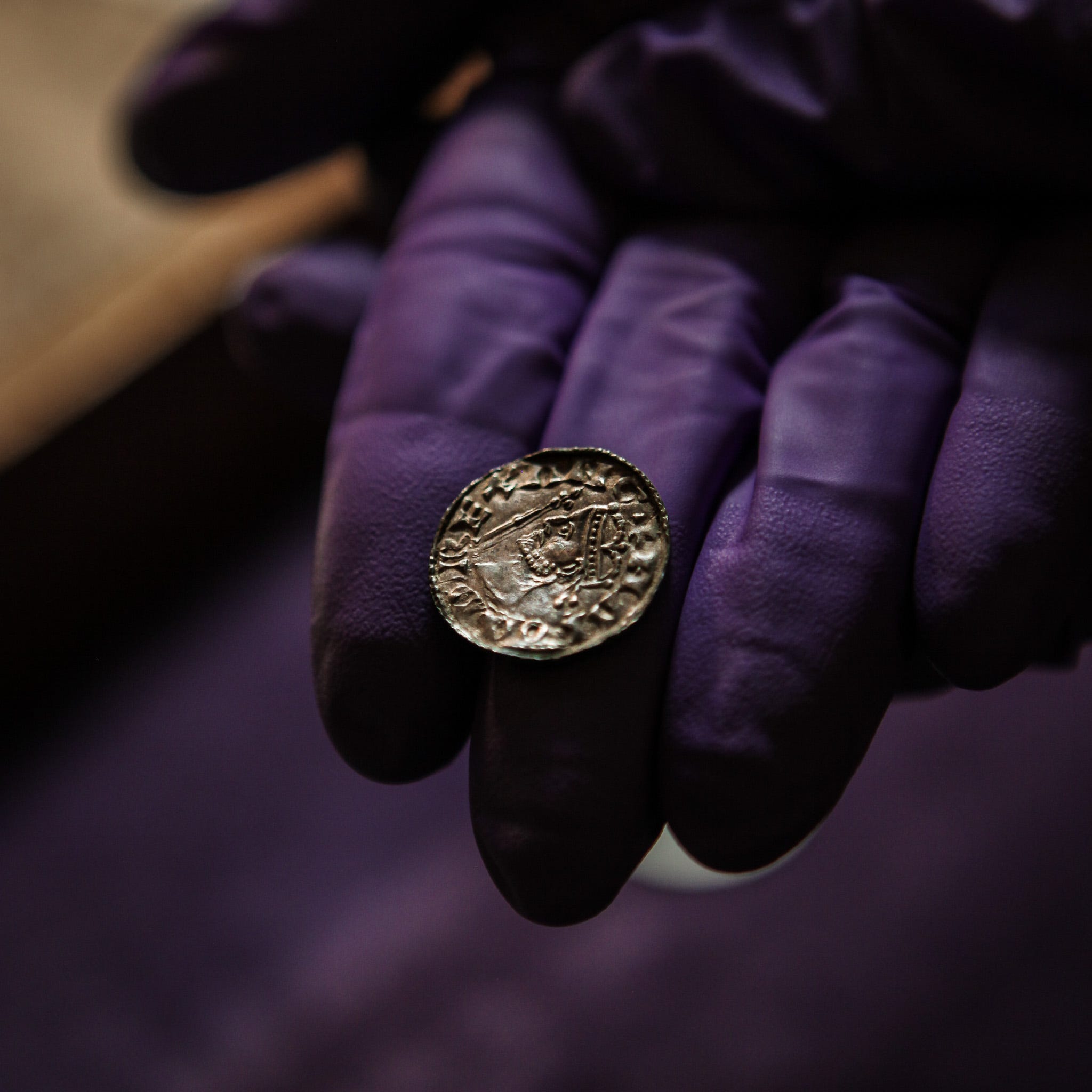
A hoard of 179 silver pennies likely buried on the eve of battle during one of the most famous years in British history—1066.
The 1060s were a period of significant political turmoil, and 1066 was one of the most volatile years, containing the deaths of two kings and a succession crisis, which led to two major invasions and the subsequent reshaping of British identity. Kicking off with the death of Edward the Confessor, the English council named his brother-in-law Harold, the new King of England, as Harold II. His reign was almost instantly challenged, he faced claims from Viking King Harald Hardrada and William of Normandy, and we all know what happened …
King Harold II’s rule of approximately 9 months ended with his death at the Battle of Hastings, ushering in the age of the Normans, but there was a series of pivoting events which led to this moment, with this hoard deposited in the very heart of them. Facing a Viking threat and possible invasion from the north and a Norman one to the south, Harold II struck up an alliance with northern Anglo-Saxon earls Edwin and Morcar to prevent splitting his forces across the country. Only the Viking invasion arrived with more might than anticipated, King Harald Hardrada claiming victory at the Battle of Fulford and taking York. As a result, Harold had to deal with this threat himself, dragging his army north and to victory at the Battle of Stamford Bridge, losing a third of his forces in the process, with the remaining exhausted troops marching back down the country towards the fateful Battle of Hastings.
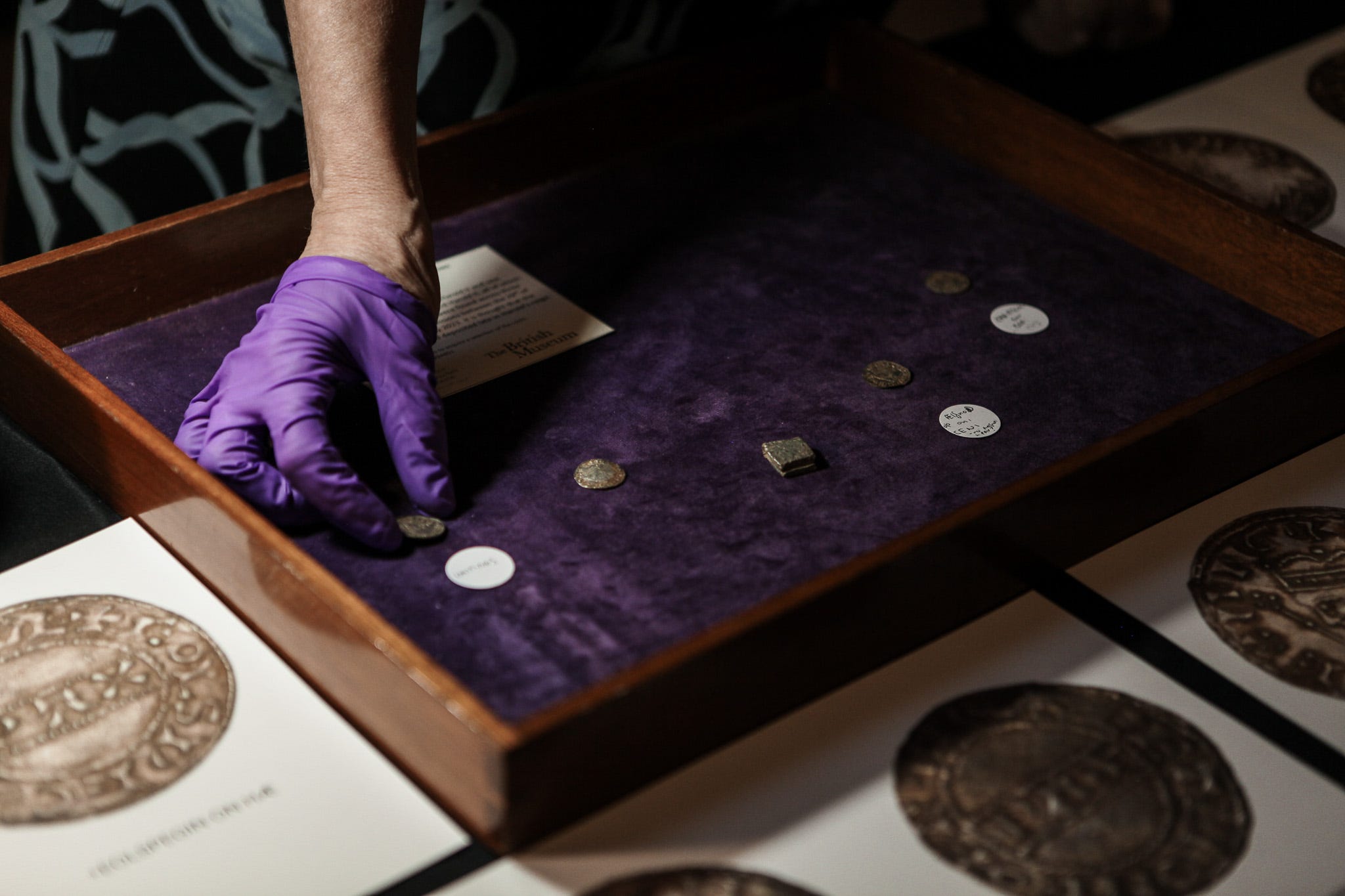
Buried just a short distance from the Battle of Fulford, and containing only coins of Harold II, more than half of which had been minted at York, it is clear this hoard was buried by a local, maybe one fearing the outcome of such a pivotal battle, and perhaps even one drafted to fight in Harold’s name by Edwin and Morcar. But there is another possibility, containing some irregular variants similar to those issued in the period of uncertainty in the months which followed Harold’s death a few short weeks after the Battle of Fulford and the coronation of William the Conqueror, and a folded ingot of silver bullion, maybe this was a hoard buried for assurances, an accumulation of Anglo-Saxon wealth hidden in the oncoming shake-up of the country by the Normans.
For more details, check out its PAS record here:
A Roman Vehicle Fitting
Roman finds accounted for the highest number of items recorded in 2024 (43.37% of finds).
A unique find for Roman Britain.
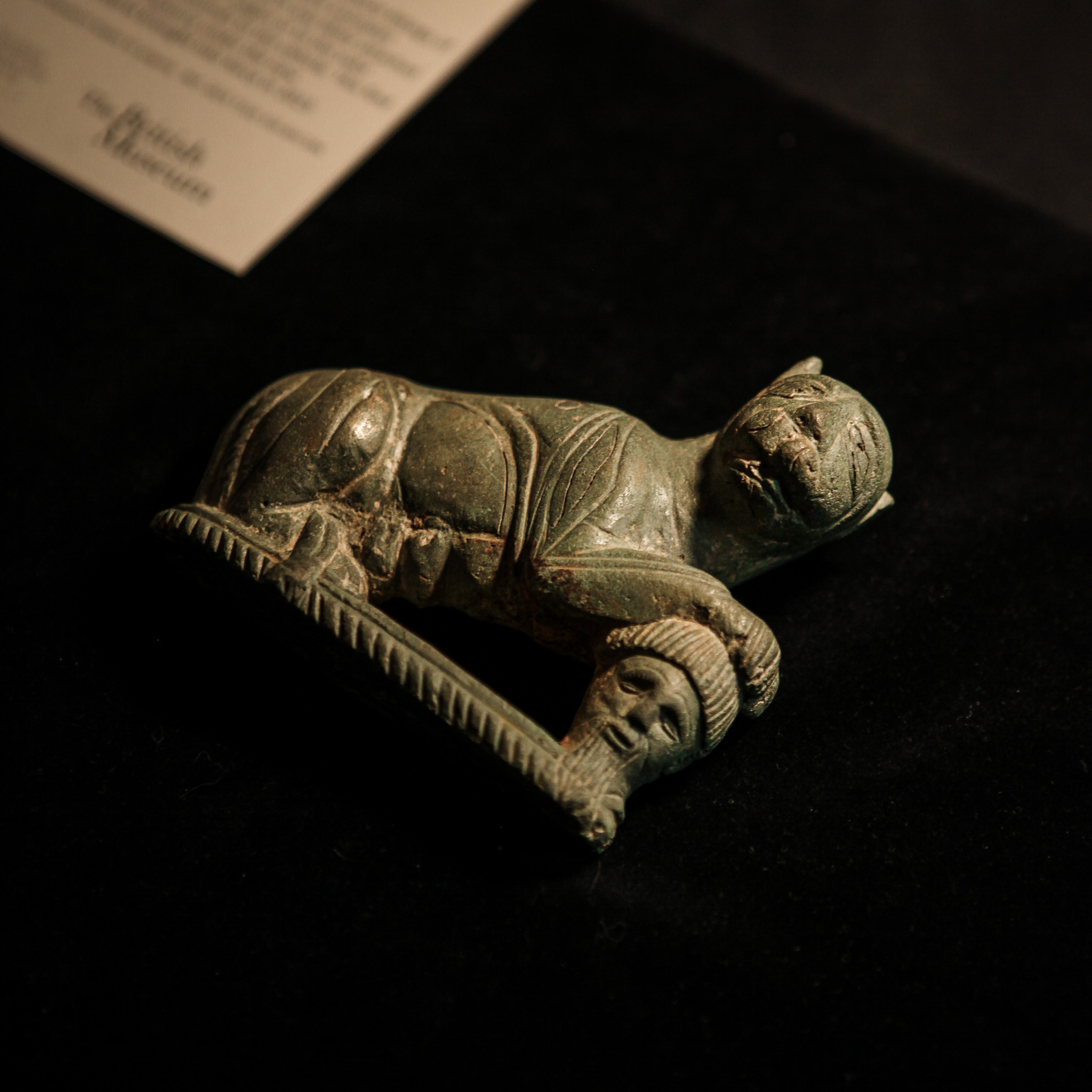
This find made us quite literally stop in our tracks when we saw it for the first time. It’s a complete copper-alloy Roman vehicle fitting which is, so far, unparalleled.
Sculpted in the form of a big cat—speculated to be a female panther—resting both its front paws on the severed head of a barbarian and incised with distinctive decoration which is reminiscent of Iron Age La Tène art, there’s no doubt that this object is the product of Roman Britain, where Roman and Iron Age cultures blended into a unique Romano-British style. It’s a vehicle fitting, the decoration from a ‘fancy carriage’ in the words of Dr John Pearce, an archaeologist from King’s College, London, who researched the item for the Portable Antiquities Scheme, and was found in Harlow, Essex by a detectorist—but it doesn’t match any examples previously found here in Britain or the Continent.
Listen to John’s thoughts about the Harlow fitting here:
Dr John Pearce, King’s College, London
Already rare in Britain, vehicle fittings generally attach to the body of a carriage or wagon, or to the yoke which hitched draught animals to the vehicle. Yoke figures are generally modelled in the round, whereas vehicle fittings are fixed flat; both would have come in pairs. The Harlow fitting is modelled flat, like a vehicle fitting, only intended to be seen from one side, yet it is much smaller and bears a different method of attachment to the previously known examples. It’s unique, maybe even an artefact commissioned specifically by one of the Roman elites occupying the neighbouring Roman villas to its findspot, a household luxury utilising symbols connected with the god Bacchus to promote a sense of protection and aura of luxury.
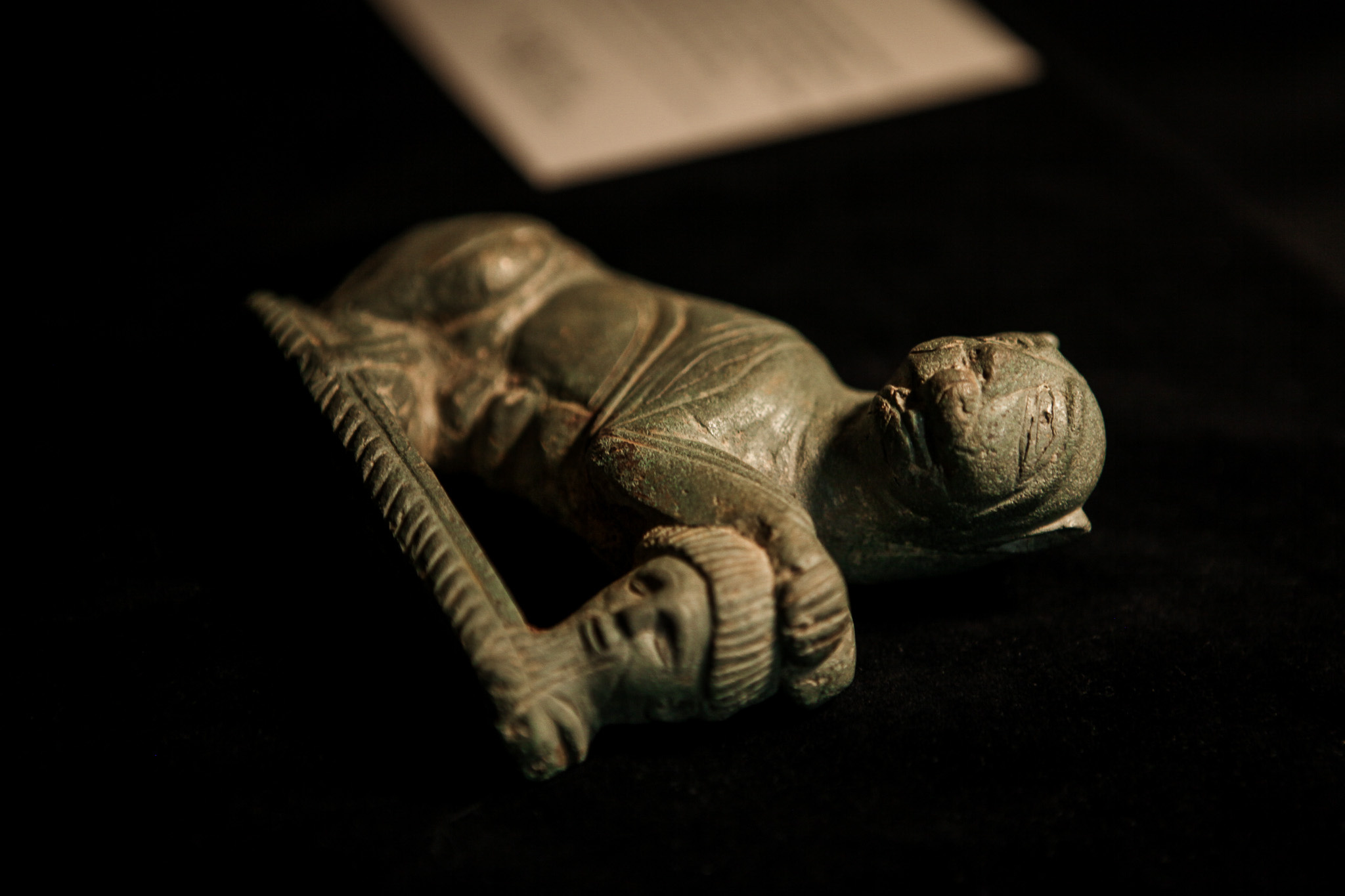
It’s set to become ‘one of Essex’s most iconic archaeological objects,’ as claimed by Lori Rogerson, Essex’s Finds Liaison Officer, and is an important addition to Britain’s history, only made possible through the newly introduced significance-based criteria of the Treasure Act 1996.
For more details, check out its PAS record here:
10 AM, The British Museum, London, England.
The outside world is starting to trickle through the British Museum doors, and the exceptional discoveries are being swept back to their research labs and conservation units. The first members of the public mill around the Tudor Heart, unaware of the event they have narrowly missed, and the latest crucial contributions to history made by metal detectorists, mudlarks and field walkers alike, instead captivated by this glistening treasure.
The discovery of buried treasure is on the rise, with more and more finds reshaping history each year, but they are also adding mounting pressure, piling onto the Portable Antiquities Scheme and Museums. The Tudor Heart is a once-in-a-lifetime find, and a rare piece of English history, but its presence in this gallery isn’t permanent; it’s part of an appeal by The British Museum to raise £3.5 million by April 2026, to secure its place in the public, and not a private, collection. Of course, not all finds are on the level of the Tudor Heart, but it’s a sign of things to work on going forward; of more collaboration and open channels between finders and museums, more public awareness around the realities of discovering buried treasure and more responsible detectorists stepping up to preserve their finds for future generations.
This is what Ian had to say about the challenges faced by the Treasure Report:
Ian Richardson, Acting Head of PAS and Treasure at the British Museum
Treasure is out there, that much is clear, but just walking over it is only half the job, the rest is in the hands of the responsible Metal Detectorists, Finds Liaison Officers and Museums campaigning to keep our history publicly available, and celebrated at events like these. Who knows what next year’s report will bring …
Why not step inside the British Museum with us:

I really enjoyed reading this. Thank you for the history on the items at the museum. Very interesting ❤️Brun
Stunning photos! Loved being able to see the items up close after watching your video. Such amazing detail.