
The Roman Found Dig Day
Searching for a Local Legend in Moreton, Essex

The good people of Moreton, Essex, had no idea what was about to descend on their sleepy village. Or at least they didn’t until we booked the Village Hall…
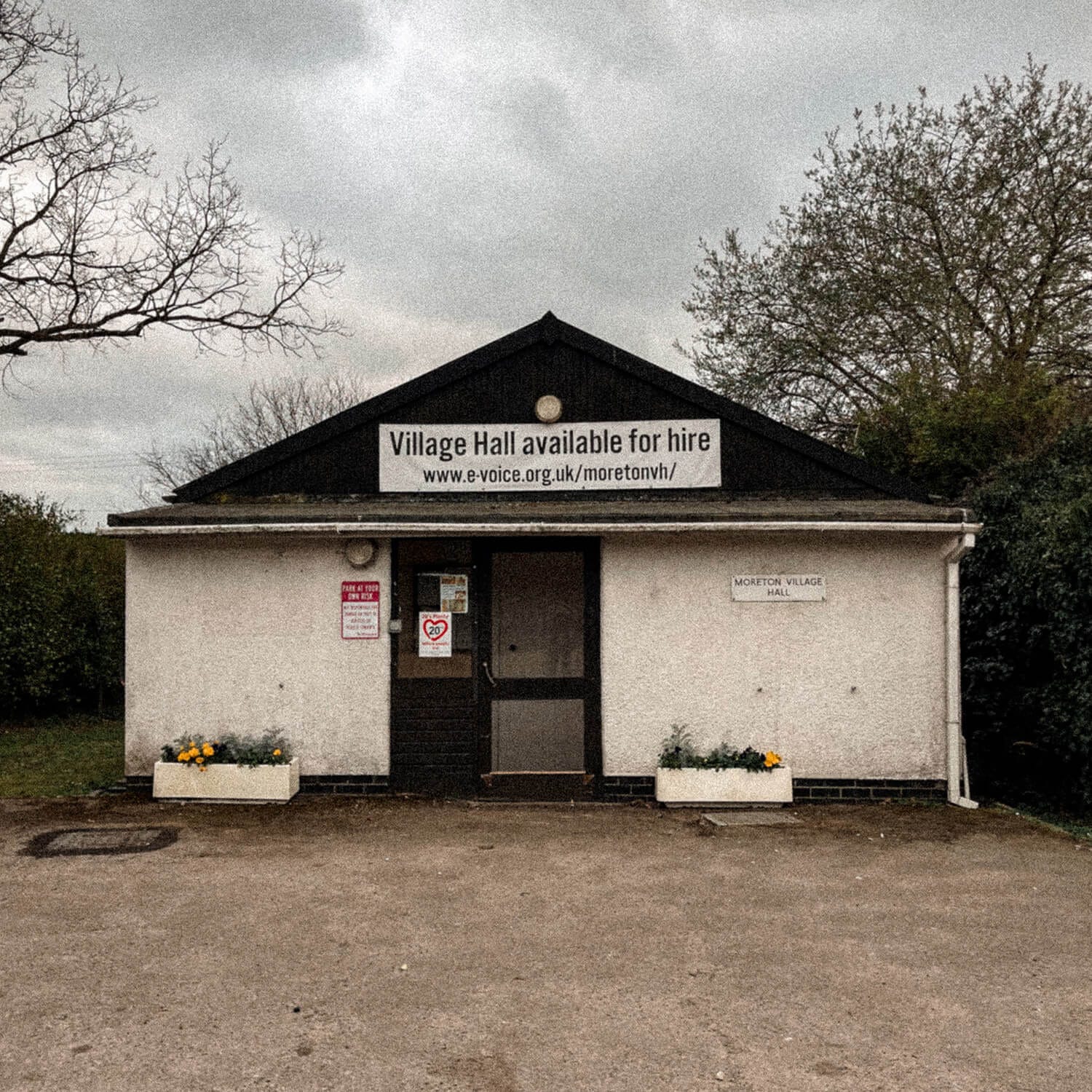
Old-world charm, close to London, and with good transportation connections. This was the hard-to-fill brief for the location of Roman Found’s first-ever ‘Dig Day’. Where we would be bringing together booksellers, literary festival organisers, journalists, podcast hosts, detectorists, mudlarks and one rare coin specialist, for a day in the fields, which—hopefully—would enchant our guests into the world of metal detecting and provide the perfect backdrop to launch ‘Things We Found in the Ground’ —our debut book—to the community. But did such a place even exist?
Welcome to Moreton
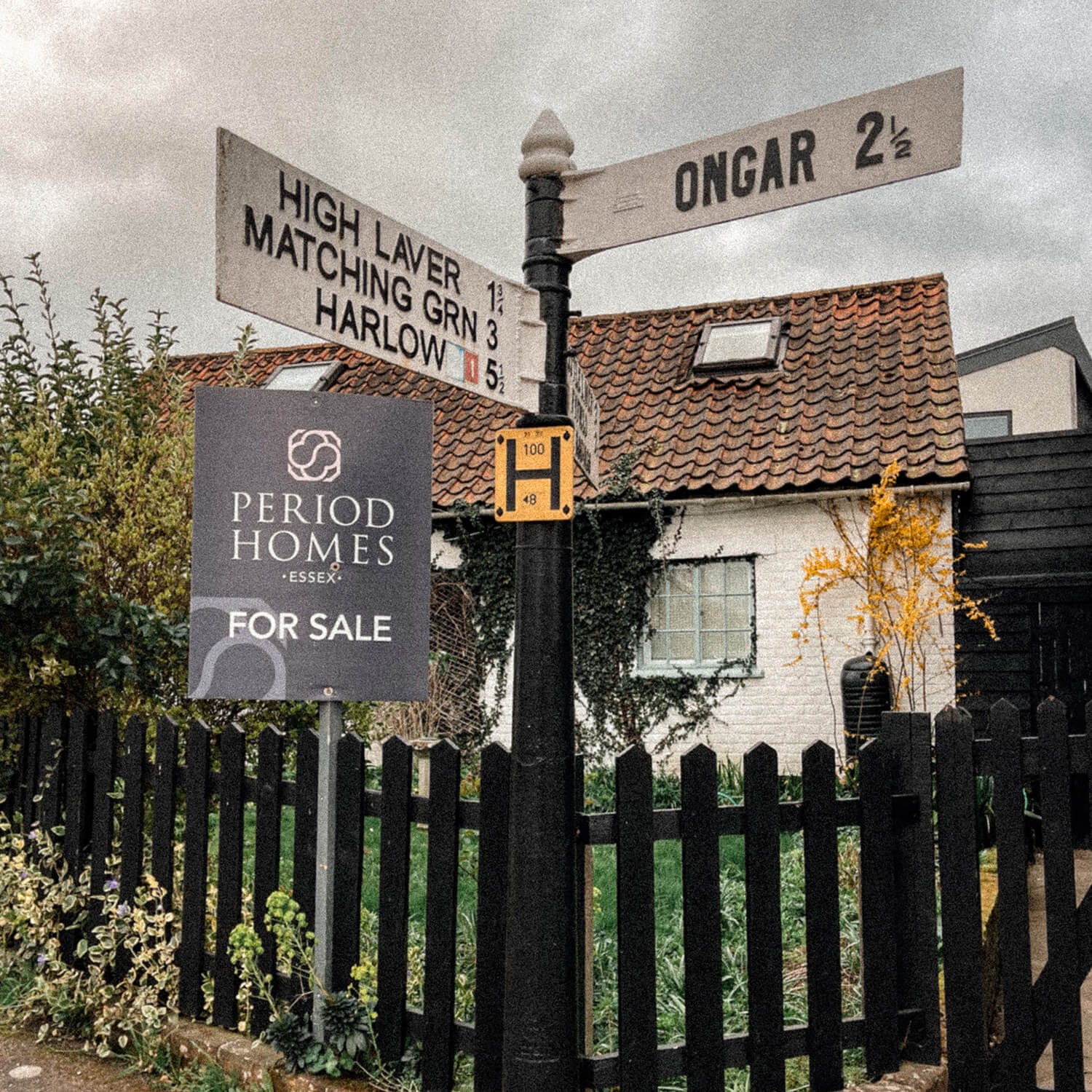
If you travel just 3 miles from Chipping Ongar, drive less than 20 minutes from the Central Underground Line at Epping Station, and hop only a stone’s throw from the M11, you’ll find Moreton. A quaint village, surrounded by rural, country lanes, rolling countryside, and an unusual amount of moated sites and pre-eighteenth-century houses—the scattered evidence that there might be more to Moreton than initially meets the eye. Location requirements. Tick. So what about the history?
Our Background Check
Moreton is the crossing point of the Cripsey Brook for the Roman road (Margary 30), which runs from London to Great Dunmow and cuts right through the village.
During Anglo-Saxon times, it fell under the administrative area of the Ongar Hundred (Essex was divided into 19 of these hundreds, and they served as an effective way to manage land with a designated council in charge of each region), which was a mostly rural area, centred around the ancient market-town of Chipping Ongar.
Its first mention in historical records is in the Domesday Book in 1066 as a modest manor, only 1 hide and 20 acres (around 140ish acres today).
Historically, agriculture has been Moreton’s main industry, branching out with the addition of a flax ground in the late 12th century (growing the raw material for the production of linen), and a malt kiln in the 18th century (to dry barley to brew beer).
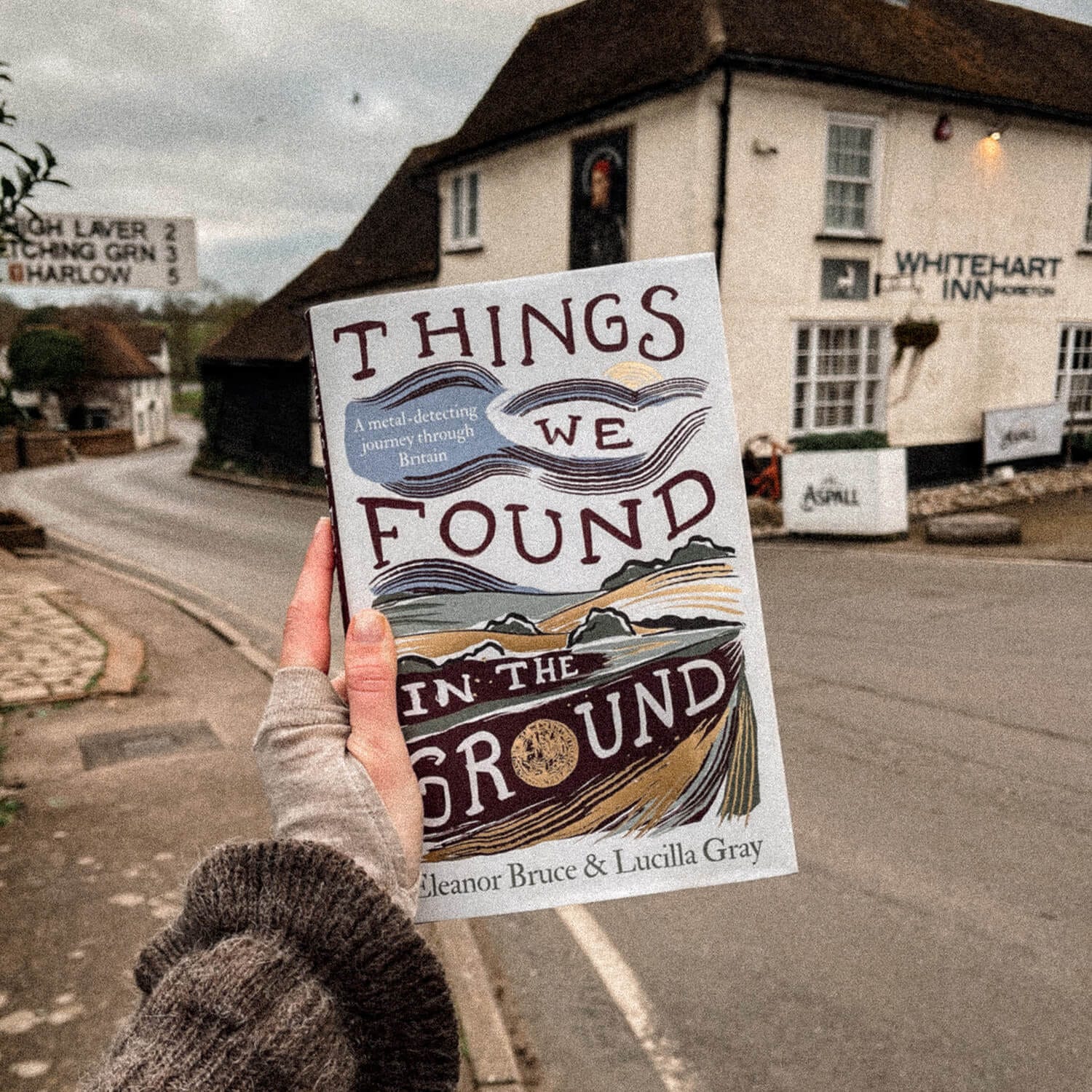
Moreton might be known today only for its agriculture, with a spraying demonstration scheduled the day after our dig, likely one of the most exciting events in the village’s calendar (apart from ours, of course). But from its rich catalogue of history, we get the sense that this humble community, with its two historic pubs, The White Hart and The Dog & Pickle, medieval church and timber-framed houses, might have a few surprises waiting for us.
A Local Legend?
‘Have you heard about the gold plates?!’ All polite greetings are replaced on arrival to the field, our fellow-detectorists and close friends already caught up in the thrill of a rumour—an old yarn recently spun about buried treasure.
‘It was an old geezer’ Aaron recounts to us, gesturing excitedly over the scattered carcasses of thirty Minelab Vanquish 360’s mid-assembly; he’s already driven over 2 hours to be here today, purposely setting off early to help with the set-up—which began at 7 am for the LP Metal Detecting and Minelab Team—earning himself our eternal fondness, and repetitive wrist strain from screwing in coil lugs. ‘You just missed him!’ he explains, diving into a tale which sounds like it’s come straight out of National Treasure.
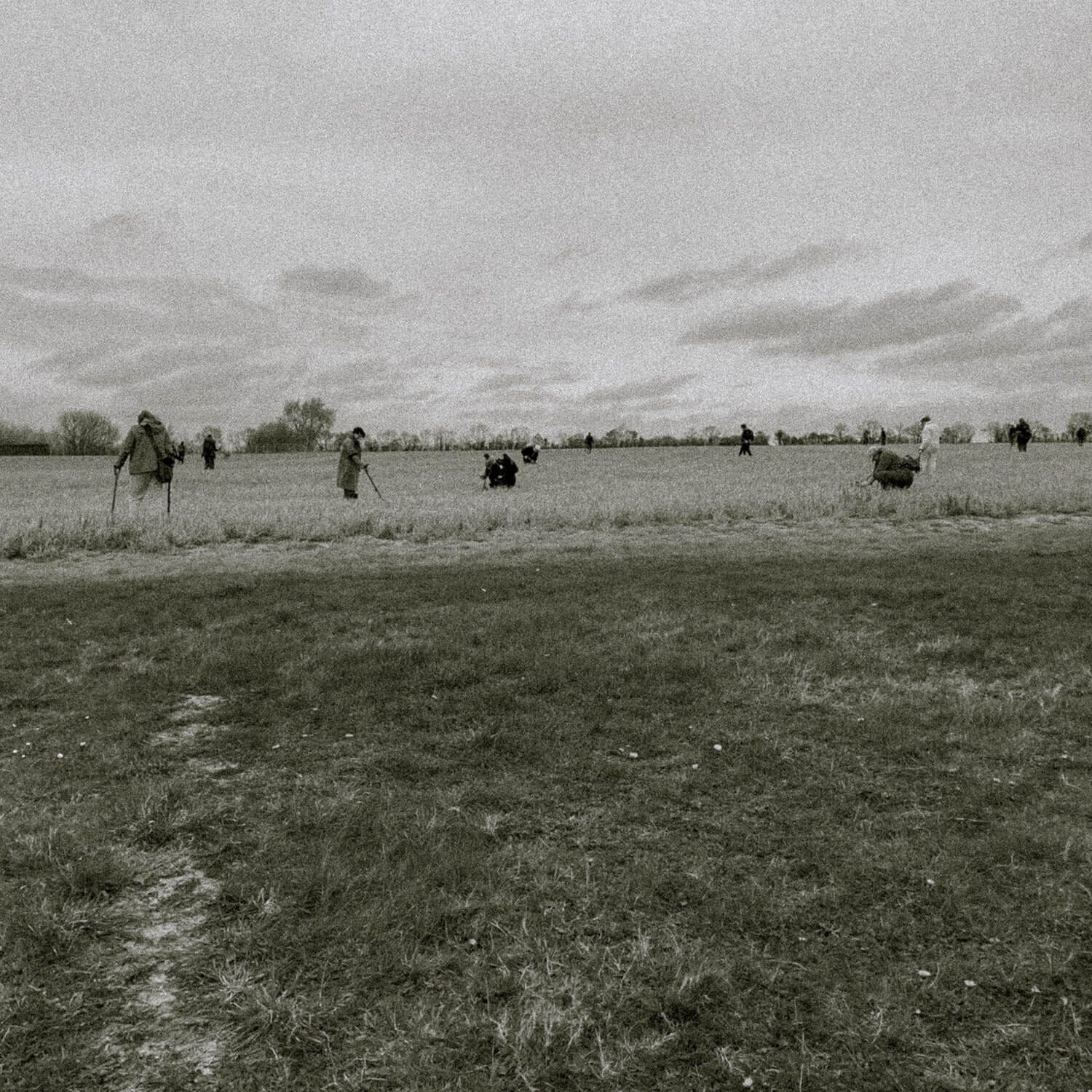
It seems that the village already knows exactly what’s occurring in this field today. Our publicist has received an email from the local gazette asking for pictures for their next issue, and in the background to Aaron’s tale is the clamouring of around 100 primary school kids waving from their fence, which borders the edge of the parking field. So it shouldn’t really be a surprise we’ve managed to rustle out the local legends, a particularly wizened ‘geezer’ as Aaron so charmingly put it, taking on the role of village bard to pass on the ancient lore to the latest newcomers and treasure-seekers…
‘There’s a Roman Road which runs through these parts, past the pub junction, past the school and right into the corner of this very field by the lake. So you won’t be surprised when I tell you there’s treasure to be found … But it isn’t Roman … You see this Church right here. There used to be great wealth found inside … Huge plates made of GOLD … Religious serving platters fit for an abbey, they said … Then ol’Henry came along, didn’t he. Taking the wealth out of our churches. So what did they do? … They buried them, of course! Right along the Roman Road which lies before us …’ — The ‘Old Geezer’ aka Moreton’s local bard.
The Hard Facts
There is a connection between the parish church of St Mary the Virgin (Moreton) and the wealth of an Abbey. William de Scohies, the Lord of the Manor of Moreton in 1086, gave the village church, its land and tithe to the abbey of St Stephen in Caen, Normandy, France. Founded by William the Conqueror, the abbey of St Stephen in Normandy was one of the key Benedictine monasteries in Normandy, and as such, exceptionally wealthy. But that didn’t mean that wealth steeped down to the parish churches; in fact, it was often the other way round, with the tithes/revenue from the churches adding to the wealth of the parent-abbeys or priories.
Advowsons, the right to appoint a parish priest, were one of the most important assets behind a church and its revenues/tithes, and were often treated like property. The advowson for the Church of St Mary the Virgin was held by the prior of Panfield, a cell of the abbey of St Stephen, until 1335 when Edward III seized the priory on account of war with France and the advowson came under the crown, severing the church’s link with the abbey centuries before the dissolution of the monasteries—Panfield Priory formally becoming a possession of the crown from 1414.
The route of the Roman Road (Margary 30) does indeed pass diagonally across the field.
Naturally, there are no written records of Moreton’s missing gold plates. Still, the general tale of Moreton’s Church losing its connection with its parent-abbey is true, even if our ‘Old Geezer’ has gotten his context skewed by a few centuries. In rural communities like this one, it’s normal for the grains of truth to be passed down orally, with each generation adding their own dramatic flair to the tale, so maybe those gold plates are out there, just waiting for the right detectorist to stumble across them in the field…

Is Anyone Stopping for Lunch?!
Gold plate fever seems to have gripped our assorted group of diggers, Harper North’s publicist attempting—and failing—to rally anyone out of the fields. Lunch has arrived from the local pub, been carefully unpackaged and displayed down long trestle tables in Moreton’s Village Hall with not a willing diner in sight.
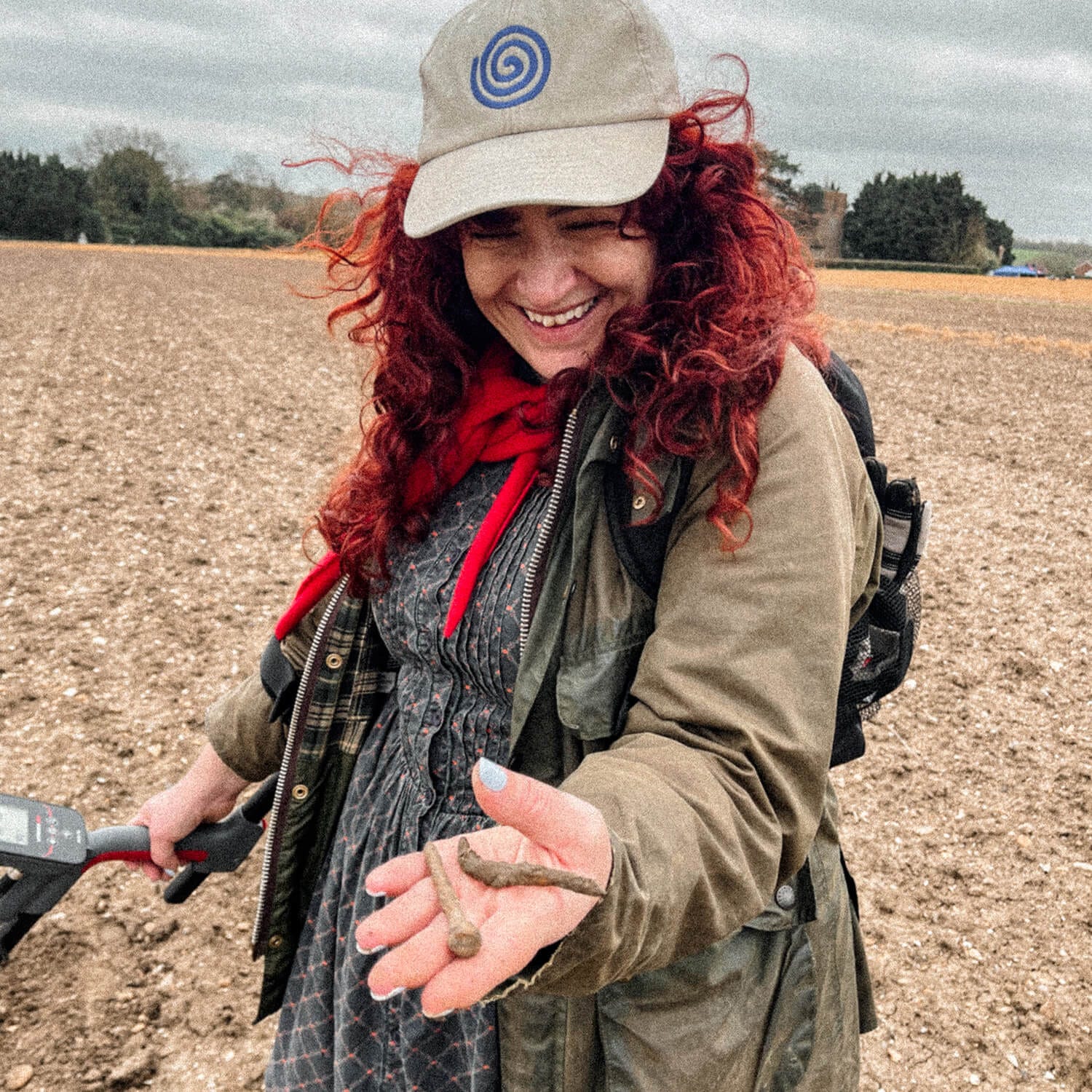
‘GIRLS! LOOK WHAT I’VE FOUND!’ beckoned over by Hair Historian, Rachael Gibson in the field, it becomes apparent it’s not just gold plate fever which has our newcomers in their clutches. It’s something much simpler than that. Proudly presented to us, outstretched in one dirt-streaked palm, a fresh manicure suffering silently are two iron nails. A seasoned detectorist might have groaned and tossed them into their bag without ever bothering to brush the dirt off, but Rachael has just found treasure. These nails, the embodiment of her newfound joy for finding things in the ground, were carefully buttoned into the pocket of her wax Barbour jacket. We share our congratulations and invite her to lunch—which will soon start gathering dust if no one eats it—receiving a ‘I’ll make my way over’ in response, knowing in our souls that she’ll never make it, too lost amongst the beeps and the dirt.
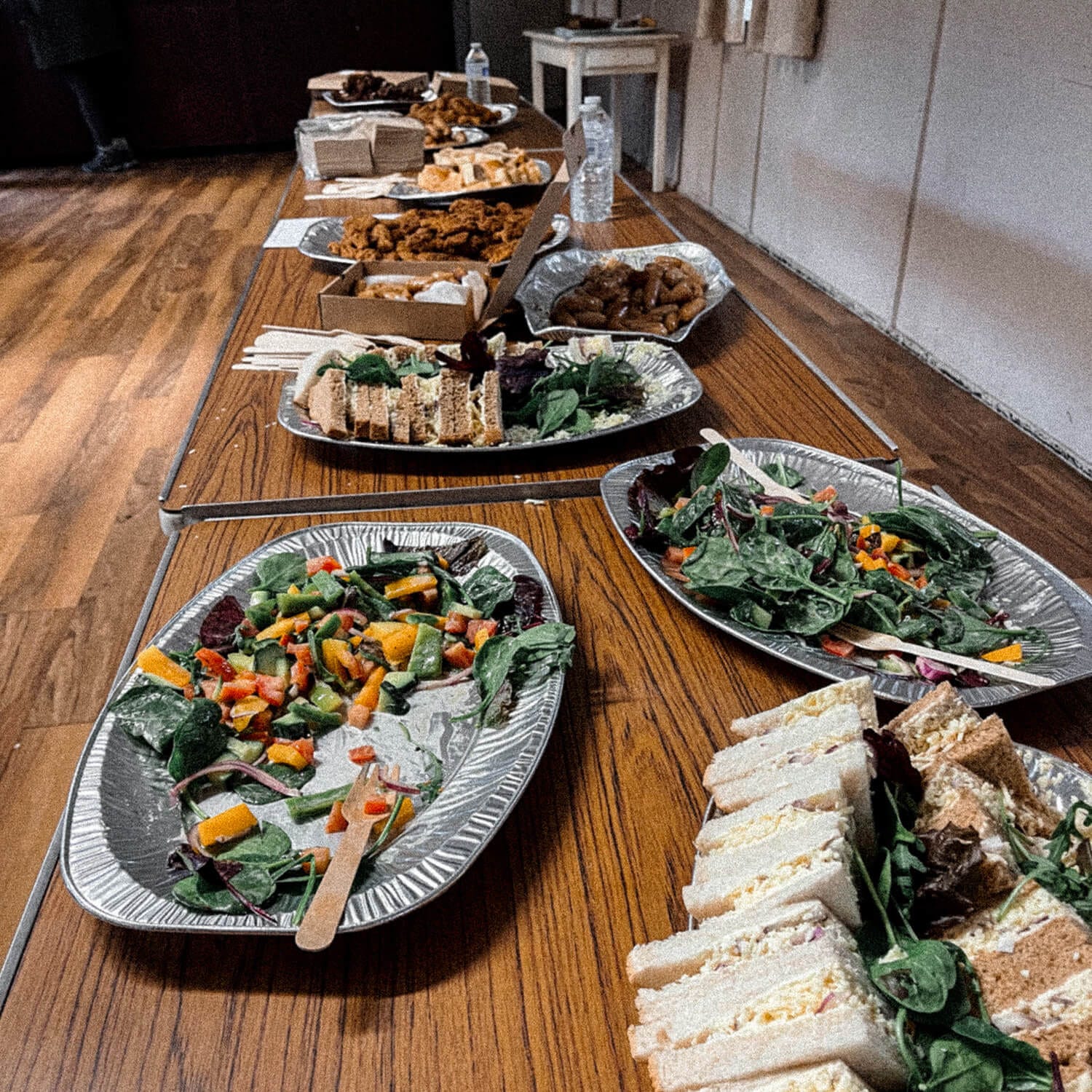
Moreton’s Village Hall could have arrived straight from the set of Detectorists, complete with two local ladies serving freshly brewed tea with a side of homemade cake, which they’ve baked especially for the occasion, and missing only Terry’s button presentation. Handily, it’s directly opposite our field for the day, its Detectorists-coded post-war shelter, soon filled with the buzz of the reluctant diggers dragged in from the fields, and an impressive spread of sandwiches, honey-and-mustard sausages, pizza, fries, salads and rustic sausage rolls. Naturally, it’s the seasoned detectorists who are the last to the table, too excited about the prospect of finding one of the 20 custom-made copper ‘Roman Found’ tokens which Ellie buried that morning. Any onlookers would have been forgiven for believing the gold plates had been found as our copper tokens were released from the earth, the finder, slightly deafened by their cripplingly loud signals, as excited as Rachael to find her iron nails, and prompting a cheer.
The Things Found in the Ground
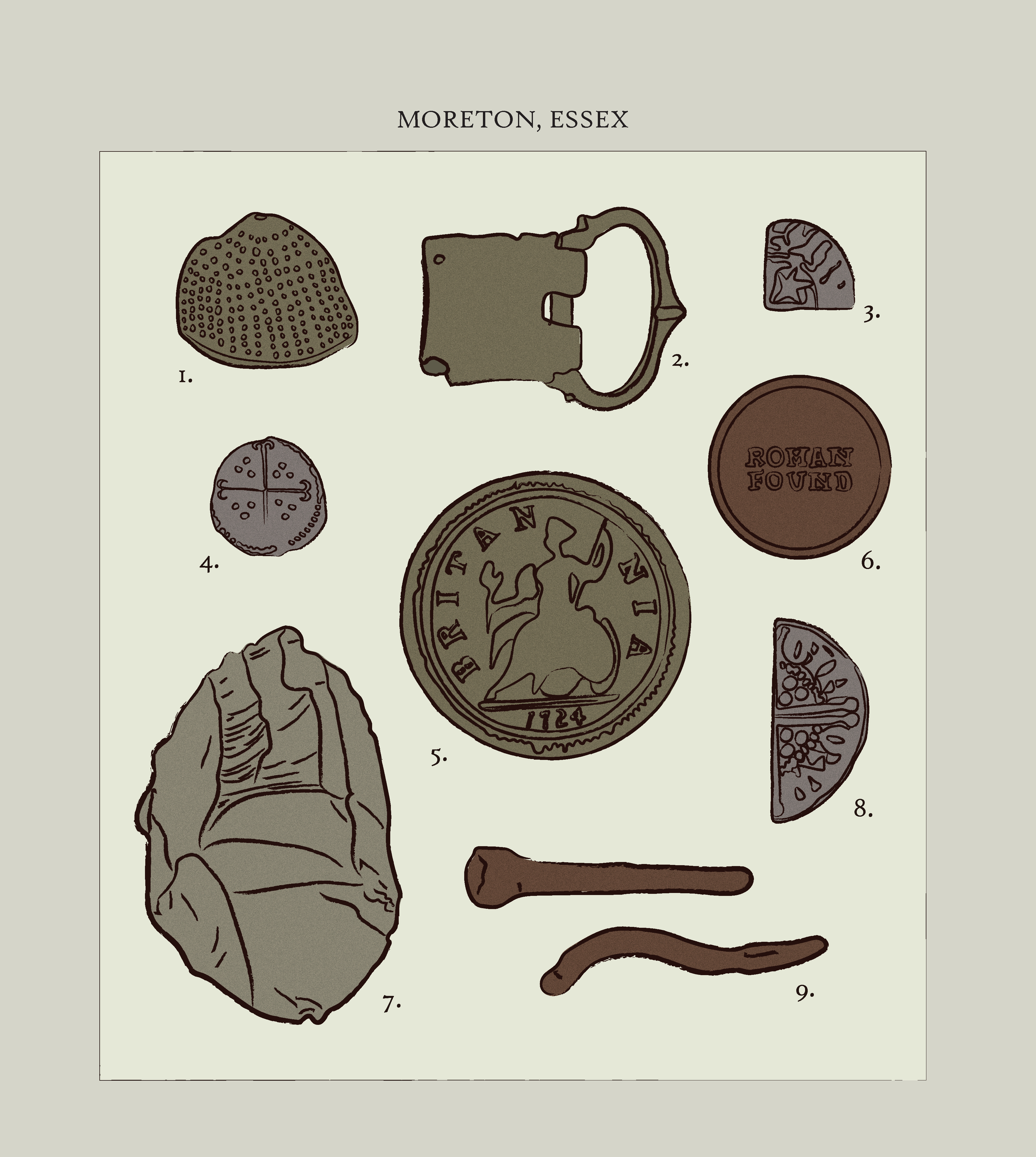
1300–1500 Medieval Beehive Thimble - Jelly @themetaldetective2023
1350–1450 Medieval Buckle & Buckle Plate - Alessio @londonmadlark
1250–1280 Alexander III Cut Quarter (Scottish) - Ellie @missdetectorist
1582–1600 Elizabeth I ‘Portcullis’ Halfpenny - Alessio @londonmadlark
1717–1718 George I ‘Dump Issue’ Halfpenny - Si @sifinds
21st Century ‘Roman Found’ Token - Timmy @detectortimmy, Sam @the_sussex_searcher & Jane @myordinarytreasure
8300–3500 BCE Mesolithic Blade Core - Aaron @anglosaxonsceathunter
1247–1279 Henry III Cut Half - Aaron @anglosaxonsceathunter
19th Century Iron Nails - Rachael @thehairhistorian
Throwing over 30 mixed-matched detectorists, history enthusiasts and industry specialists into a field with nothing more than a metal detector, a spade and a ‘good luck’ could have been a disaster. But under Moreton’s gentle and close watch (our field experiencing more dog walking traffic than it had on any other random Tuesday), what was actually achieved was so much more than a fun day out, and we’ve certainly caused a stir. Ellie is certain the residents-only local Facebook group, the ‘Fyfield and Moreton Grapevine’, will be rife with tall tales, and maybe even rumours of the gold plates being found.
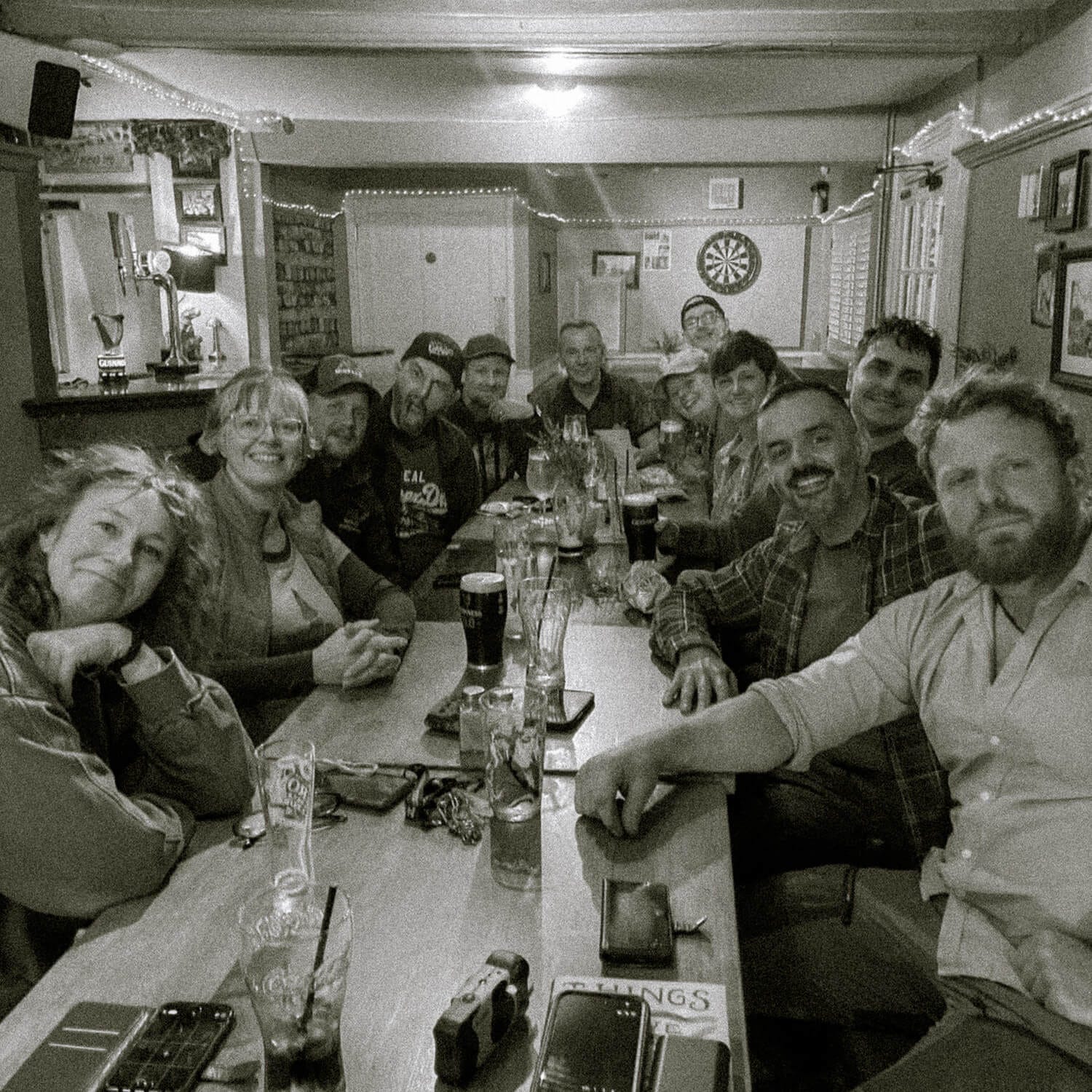
And we may have stumbled across one of the two pubs open post-dig.
‘Things We Found in the Ground’, our debut book, which, as we continued to write, became more and more about community and people as it was about metal detecting, now launched alongside a new community forging in the fields in front of us—an eclectic bunch united through the simple delight of finding something in the earth. We couldn’t have wished for a better day, although our 10 remaining un-found ‘Roman Found’ tokens will likely become the curse of the local metal detecting group for years to come…



My face in that picture really epitomises my joy 🥲